

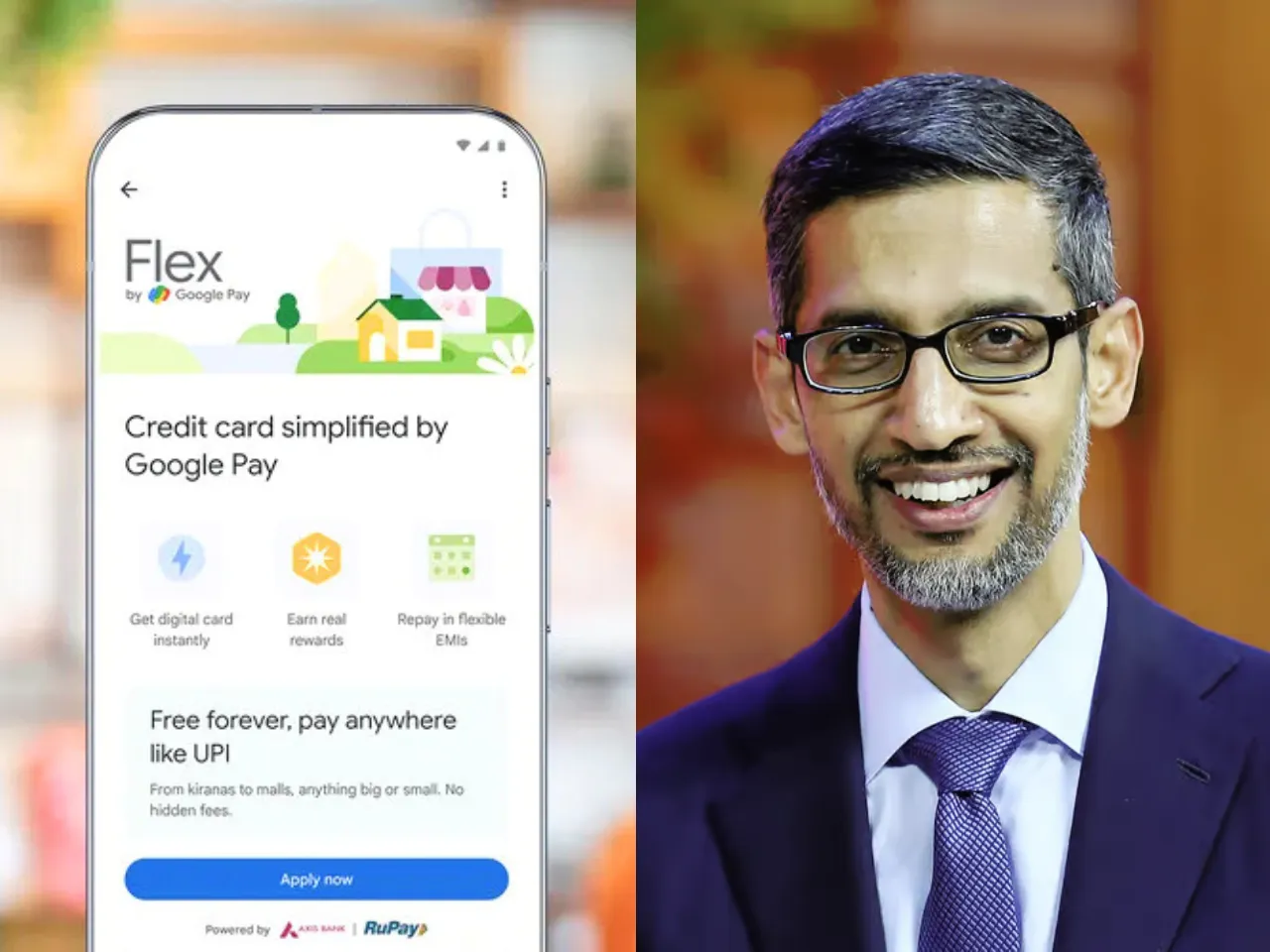
Google Pay has partnered with Axis Bank to launch its first-ever UPI-powered co-branded credit card in India. With this move, the payments giant enters the fast-growing credit-on-UPI space.
The card is called the Google Pay Flex Axis Bank Credit Card. Axis Bank issues the card, while the RuPay network powers it. As a result, users can use credit directly for everyday UPI payments.
Bringing Credit Closer to Daily Payments
UPI has become India’s most-used payment method. Because of this, fintech firms now want to blend credit into UPI flows.
Therefore, Google Pay designed the Flex card to work inside its app. Users can scan QR codes, pay online, and manage credit without leaving the platform.
In a joint statement, Google Pay and Axis Bank said the goal is to make credit as simple and common as UPI payments.
Why RuPay Matters in This Launch
Unlike Visa or Mastercard, RuPay supports UPI-linked credit payments. For this reason, it plays a key role in this launch.
With RuPay, the Flex card works across millions of offline merchants. At the same time, users can also pay on apps and websites.
As a result, the card fits both daily spending and larger purchases.
Instant Rewards Drive User Appeal
Axis Bank built the Flex card around instant rewards. Because of this, users earn benefits the moment they spend.
Customers earn reward points called “stars” on every transaction. Each star equals Rs 1.
Notably, users can redeem these stars instantly on eligible payments. They do not need to wait for the billing cycle to end.
Therefore, the card suits frequent UPI users who value real-time rewards.
Axis Bank Highlights the Digital Opportunity
According to Arnika Dixit, President and Head of Cards, Payments and Wealth Management at Axis Bank, UPI’s growth created a clear opening.
“With UPI becoming the preferred payment mode, we saw a chance to build a credit product for digital-first users,” she said.
She added that the partnership blends Axis Bank’s banking strength with Google Pay’s technology. Together, they aim to simplify daily payments.
Fully Digital From Application to Usage
Google Pay issues the Flex card in a fully digital format. Users can apply directly inside the app.
Importantly, the process involves no paperwork and no joining fee. Once approved, users can start spending within minutes.
Because the card lives on the phone, users always stay in control.
Wide Acceptance Across Merchants
Since the card runs on RuPay, it works at millions of offline stores. Users can simply scan a QR code and pay using credit.
Additionally, the RuPay credit card supports online payments on websites and apps.
Therefore, users do not need a separate physical card for most transactions.
Simple Repayment and Spending Controls
Google Pay handles all card management inside the app.
Users can:
- Track spending in real time
- Pay bills in full or convert them to EMIs
- Set transaction limits
- Block or unblock the card instantly
- Reset the card PIN anytime
Because of these features, users get better control over their credit behavior.
Available Only on Google Pay
Google Pay offers the Flex credit card exclusively on its app. Currently, the company is rolling it out in phases.
Meanwhile, interested users can join the waitlist within the app.
Over time, access will expand to more users across India.
Expansion Plans With More Banks
Google Pay also plans to extend the Flex platform to more partner banks. Through this step, the company aims to deepen its role in India’s fintech ecosystem.
In turn, more users could gain access to app-based credit products.
Why This Launch Is Important
India’s fintech market is shifting toward embedded finance. Payments, credit, and rewards now live in one place.
By launching a UPI-powered RuPay credit card, Google Pay aligns with this trend.
More importantly, the Flex card shows how UPI is evolving beyond payments.
As credit-on-UPI grows, products like this could reshape how Indians use short-term credit every day.

