WHAT THIS ARTICLE IS — In February 2026, world leaders gathered in New Delhi and pledged over $200 billion to India’s AI future. The headline is real. What it actually means for a founder building today is more complicated. This report cuts through the announcement and answers the one question that matters: which parts translate into something tangible for your startup right now, and which parts are still years away from your desk?
NEW DELHI, FEBRUARY 2026 — For five days in February, the corridors of Bharat Mandapam in New Delhi hosted a gathering unlike anything the Global South had seen before. The India AI Impact Summit, which ran until February 20, drew tech titans and world leaders to the capital — and when it ended, the country had a number to hold onto: over $200 billion in AI and deep-tech commitments.
Unlike the dominant global emphasis on “AI Safety” seen at earlier summits, India’s gathering foregrounded the paradigm of “AI for Development and Impact” — positioning artificial intelligence as a tool for socio-economic transformation, public service delivery, and equitable growth across emerging economies. It was the first AI Impact Summit to be held in the Global South, a deliberate signal about where the next frontier of adoption will unfold.

Bharat Mandapam, New Delhi, February 2026 — the Global South’s first-ever AI Impact Summit drew world leaders, tech titans, and $200 billion in commitments.
THE NUMBERS BEHIND THE HEADLINE
The $200 billion figure, announced by Union Minister for Electronics and IT Ashwini Vaishnaw, is real — but its composition matters. Reliance Industries and its telecom arm Jio pledged $110 billion over seven years to build AI and data infrastructure, with chairman Mukesh Ambani citing compute cost as the central bottleneck to AI adoption. Adani Group matched that ambition with a $100 billion commitment to renewable-powered AI data centres by 2035. Infrastructure giant Larsen & Toubro, meanwhile, announced a venture with Nvidia to build what it is billing as India’s largest AI factory.
Global tech majors also showed up in force. Google pledged $15 billion for data centres in southeastern India, having announced the commitment last October. Microsoft committed $17.5 billion in December — its largest investment in Asia. Amazon pledged $35 billion across its India operations over five years. At the summit itself, Google announced a $30 million AI for Government challenge and a separate $30 million AI for Science fund, alongside a new climate technology centre in partnership with the Indian government.
WHAT THIS MEANS ON THE GROUND FOR FOUNDERS
The honest answer is: it depends on which layer of the ecosystem a founder operates in.
The most immediate and tangible benefit is compute access. India has onboarded over 38,000 high-end GPUs available at ₹65 per hour — nearly one-third of the global average cost. An additional 1,050 TPUs have been made available to expand AI processing capacity. At the summit, a further 20,000 GPUs were announced for provisioning in the coming weeks. For early-stage AI founders, this is a structural cost advantage that did not exist two years ago.
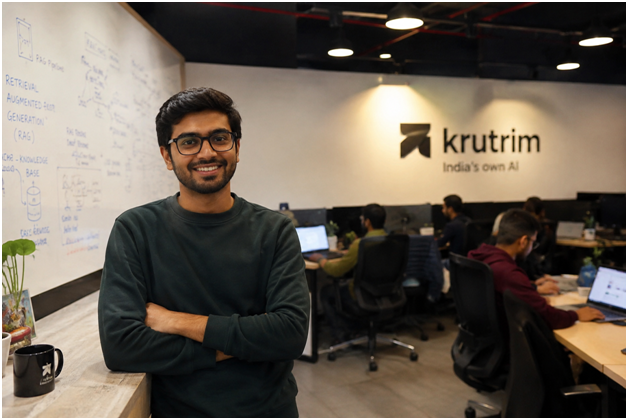
The government has also moved beyond infrastructure signalling. Under the IndiaAI Mission, 12 startups and institutions — including Sarvam AI, Gnani AI, BharatGen from IIT Bombay, Fractal Analytics, and Tech Mahindra Maker’s Lab — have been selected for foundational AI model development. India has also earmarked $1.1 billion for its state-backed venture capital fund to target AI and advanced manufacturing startups.
Anthropic opened its first India office in Bengaluru at the summit, partnering with Infosys to build AI agents for regulated industries. Six major venture firms announced plans to commit $300–500 million each in AI startups — a figure that, if realised, could nearly triple India’s 2025 funding levels.
THE GAP THAT STILL EXISTS
Despite the scale of announcements, a sobering disparity remains. India’s AI startups raised around $643 million across 100 deals in 2025. In the same period, US AI startups raised $121 billion. That ratio — roughly 1 to 190 — is the gap the summit was trying to compress.
Despite the headline numbers, India’s AI startups raised just $643 million in 2025 — a stark contrast to the $121 billion raised by their US counterparts in the same period.
Even notable private deals are small in the grand scheme. Blackstone’s participation in a $600 million equity raise for Indian AI startup Neysa stands out as a significant transaction — yet that single deal is dwarfed by the $200 billion headline and underscores the scarcity of venture capital flowing directly to founders. The government’s push is real, but it is top-down, not a bottom-up surge of private investment.
The next 12 to 18 months hold critical importance. Commitments that move from blueprint to operation — data centres under construction, compute online, venture cheques written — will define the real success of what was announced in February.
THE BIGGER PICTURE
The India AI Impact Summit Declaration was endorsed by 92 countries and international organisations. The summit also produced the New Delhi Frontier AI Impact Commitments — voluntary agreements endorsed by 13 leading global and Indian frontier model developers to publish anonymised insights on real-world AI usage and to strengthen testing across underrepresented languages and cultural contexts in the Global South.
On the sidelines, India formally joined Pax Silica — a US-led international coalition aimed at building a resilient supply chain for critical minerals and advanced manufacturing networks among strategic allies. The group already includes Japan, South Korea, the UK, and Israel. It is not a minor administrative step. It signals a meaningful alignment with the Western AI infrastructure ecosystem at a moment when the US-China AI competition is reshaping global technology alliances.
For Indian founders, the summit marks a turning point — not in the sense that capital is suddenly abundant, but in the sense that India has asserted its right to shape global AI, not just adopt it. The infrastructure is being laid. The question now is whether the startup ecosystem can build fast enough to meet it.