

WHAT THIS ARTICLE IS — The first ₹1 crore in revenue is the hardest milestone any early-stage founder crosses. The founders who get there fastest almost never hire a sales team first. Drawing on documented case studies from Freshworks, Zoho, and a founder who built a crore-revenue business in four months after quitting his job, this playbook distils the three rules that actually move early revenue — before any salesperson is hired.
BENGALURU — The first ₹1 crore in revenue is the hardest milestone any early-stage founder will cross. Not because the number is large — in the context of the Indian startup ecosystem, it is a modest target — but because most founders reach for the wrong tools to get there. They hire sales executives before they have a repeatable product. They build decks before they have customers. They optimise for optics before they have retention. The ones who get to ₹1 crore fastest almost universally do the opposite.
Across the Indian startup ecosystem, a clear pattern has emerged among founders who have crossed the first revenue milestone efficiently and without a formal sales function. The playbook is not glamorous. It is not fundable on a pitch deck. But it is, in every documented case, replicable — and the companies that follow it tend to reach their second crore and their tenth faster than those that don’t.

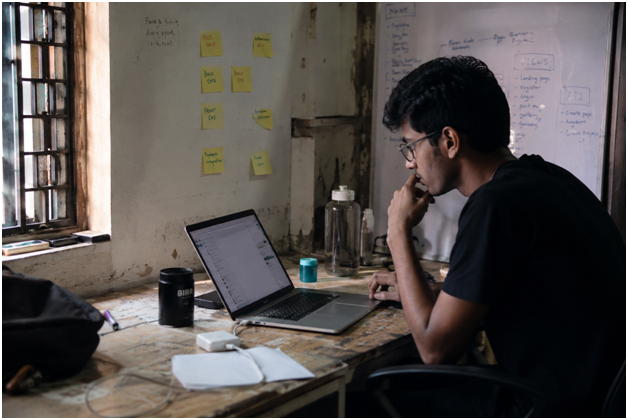
India’s fastest path to ₹1 crore doesn’t start with a sales hire or a pitch deck — it starts with a founder solving a real problem, one customer at a time.
START WITH A PROBLEM YOU ARE EMBARRASSED TO ADMIT YOU HAVE
Girish Mathrubootham founded Freshworks (then Freshdesk) in Chennai in October 2010 after reading a Hacker News comment complaining about Zendesk raising its prices by 60–300 per cent. He was VP of Product at Zoho at the time. The insight was not original — the help desk market already had over 600 competitors. What Mathrubootham understood was that this was an advantage, not a liability. In a market that already exists, you do not need to educate customers about the category. You only need to be better and cheaper than what they already use.
Freshworks grew from its first customer — an Australian company, acquired through inbound — without an outbound sales team in its early years. It bet entirely on a product simple enough to configure without enterprise onboarding, and on distribution through the search and review channels where frustrated Zendesk users were already looking. It crossed $1 million in ARR, then scaled to $100 million ARR in five years — a rate that matched the best SaaS startups globally at the time, achieved almost entirely through product-led, inbound growth before layering on sales.
The lesson is foundational: find a problem with a large existing market and a vocal, frustrated user base. The founder who is embarrassed to hire the first salesperson because the product is not yet good enough is closer to ₹1 crore than the one who hires the salesperson first.
DISTRIBUTION IS THE PRODUCT
In April 2026, a 24-year-old founder named Ujjwal Nargotra went viral after publicly claiming he had built a ₹1 crore business in four months after quitting his job. His company, LinkPlease, targets content creators struggling to manage audience engagement at scale. He acquired his first 10,000 users — without a sales team — through a freemium model: creators used the product for free until it became indispensable, then converted to paid.
The mechanism behind this is well-understood but consistently underused by early-stage founders. Freemium works when the product’s core value is experienced before the paywall, when the free tier creates a genuine dependency, and when the upgrade trigger is a natural usage threshold rather than an arbitrary feature gate. Nargotra’s viral post itself became part of the distribution strategy — the founder’s story attracting creators who were his target users.
Zoho, India’s most successful bootstrapped SaaS company, built the same principle into its architecture over decades. Entirely self-funded with no venture capital, it grew from a single product to a suite of over 55 applications. Its path to $1 billion in annual revenue in the early 2020s was built on low-cost distribution — rural development centres, deep product bundling through Zoho One, and a model in which the product itself acquired users rather than a sales force. Sridhar Vembu, its founder, has said repeatedly that no product they built was ever an instant hit — and that slow, compounding traction was the intended design.
THE THREE RULES THAT ACTUALLY MOVE REVENUE
Synthesised across these cases, and corroborated by how the broader Indian SaaS generation reached early revenue, the playbook resolves to three operating rules.
The first: talk to your first 100 potential customers before writing a line of code. Not to validate a hypothesis with a survey, but to understand the precise language they use to describe the problem. The product roadmap that comes out of 100 honest conversations is more valuable than any market research report. Founders who skip this step typically build products that are technically sound and commercially irrelevant.
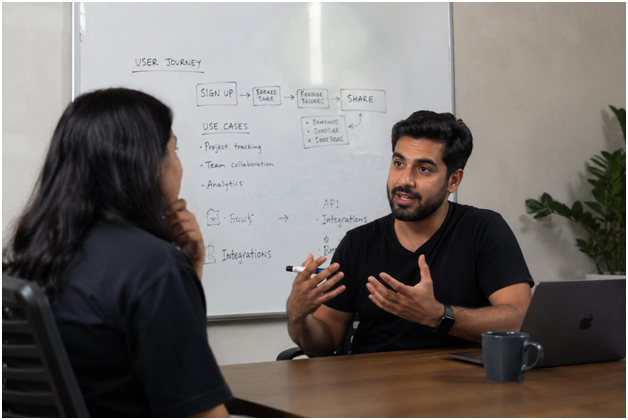
Rule one: talk to your first 100 potential customers before writing a line of code. The language they use to describe their problem is worth more than any market research report.
The second: price for commitment, not conversion. The instinct at zero revenue is to make the product free or near-free to attract users. This is almost always wrong. A user who pays ₹999 a month will give you a support ticket when something breaks. A user who pays nothing will simply leave. The goal of early pricing is not to maximise revenue — it is to acquire customers who are invested enough to tell you what is wrong with your product. That feedback, not the revenue itself, is what gets you to ₹1 crore.
The third: treat every early customer as a distribution channel. The fastest path to the first crore is not one founder selling to 100 customers — it is 10 customers who each bring in 10 more. This requires the product to be genuinely better than the alternative and requires the founder to ask, explicitly, for referrals. Most founders never ask. The ones who do find that word-of-mouth, in the Indian startup context, is the highest-converting and lowest-cost acquisition channel available.
WHAT ₹1 CRORE ACTUALLY PROVES
The ₹1 crore milestone is not significant because of the number. It is significant because of what crossing it without a sales team demonstrates. It proves that the product has a reason to exist that customers will articulate to each other without prompting. It proves that the pricing model is coherent. It proves that the founder understands their market well enough to acquire customers through the product itself rather than through the force of persuasion.
India now has over 90,000 registered startups, according to figures cited by Infosys co-founder Nandan Nilekani (DPIIT-recognised startups number over 2 lakh, but Nilekani’s figure refers to actively operating ventures). The vast majority will not cross ₹1 crore in revenue. The ones that do, in the shortest time and with the leanest teams, tend to share one characteristic above all others: they treated the product as the first salesperson, and they did not hire the second until the first had proven it could close.


