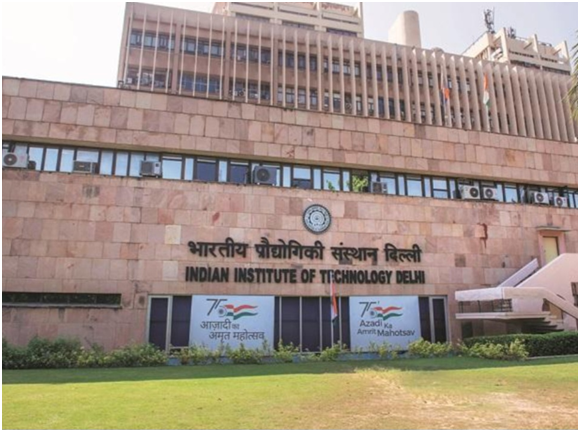
WHAT THIS ARTICLE IS — For two decades, India’s startup story was written in consumer internet and SaaS. That chapter is not over — but a new one has forcefully begun. This ecosystem report maps India’s deep-tech landscape across AI, space, semiconductors, and quantum computing: where the capital is going, which companies are leading, what the government is building, and the structural constraints that will determine whether this moment produces global giants or promising startups that plateau.
For two decades, the Indian startup story was written in consumer internet, fintech, and SaaS-for-the-world. That chapter is not over, but a new one has forcefully begun. In 2025, deep-tech funding in India surged 37% to $2.3 billion — and AI alone accounted for 91% of that capital. With over 4,200 deep-tech startups now active across the country, more than 550 added in 2025 alone, India is no longer a fringe participant in frontier technology. It is becoming one of its primary production sites.
The data, released by NASSCOM and Zinnov in early 2026, is unambiguous. India’s total tech startup ecosystem raised $9.1 billion in 2025 — up 23% year-on-year — and deep tech now represents approximately 15% of overall VC-PE activity, a structural shift the India Deep Tech Alliance (IDTA) describes as moving from ’emerging category’ to core allocation. The question is no longer whether India can produce deep-tech companies. It is whether the ecosystem can convert this momentum into globally competitive, category-defining outcomes.

India’s deep-tech story is no longer emerging — it’s infrastructure.
Artificial Intelligence: The Engine Running Everything
Artificial intelligence is not merely one segment of India’s deep-tech map — it is the current that runs through all of them. AI saw 188 deals totalling $1.22 billion in 2025, a 58% year-on-year increase in funding value, per the IDTA’s inaugural report released in February 2026. The India Deep Tech Alliance simultaneously announced a $2.5 billion capital commitment from its members toward deep-tech investment over the next three years, with $1 billion earmarked specifically for AI startups.
The nature of Indian AI companies has also matured. The early wave of AI-washing — consumer apps with a thin model layer — has given way to infrastructure-grade and enterprise-grade builders: companies working on AI for drug discovery, AI for semiconductor design, AI for defence systems, and AI for industrial automation. This is not the AI of chatbots. It is the AI of research instruments.
Space Tech: From Demonstration to Deployment
India’s private space sector crossed a critical threshold in 2025. Over 300 active space startups now operate across launch vehicles, satellite platforms, Earth observation, propulsion, and downstream analytics — and funding exceeded $276 million in space tech alone that year, more than the prior two years combined. The sector has created approximately 22,000 direct jobs, and India’s space economy now generates a $2.54 multiplier for every dollar invested.
The companies leading this transformation are well-known domestically but increasingly recognised globally. Agnikul Cosmos made history in May 2024 with the world’s first flight of a single-piece 3D-printed rocket engine, launched from India’s first private launchpad at Sriharikota. It has since raised $50 million and is targeting 50 launches annually by 2028. Skyroot Aerospace — which launched India’s first private rocket, Vikram-S, in November 2022 — partnered with Axiom Space in June 2025 to expand global access to low-Earth orbit. Pixxel, meanwhile, raised $95 million for its hyperspectral imaging constellation: satellites that can track crop health, pollution, and climate data in real time, and which launched three of the world’s highest-resolution commercial hyperspectral satellites in January 2025 aboard a SpaceX Transporter mission.
Policy has accelerated alongside private ambition. The Union Budget 2025-26 allocated ₹13,416 crore to the Department of Space. IN-SPACe awarded a consortium of Pixxel, SatSure, PierSight, and Dhruva Space India’s first PPP project to build a 12-satellite private Earth observation constellation — a project the consortium undertook with zero government financial support, signalling genuine commercial confidence in the sector.

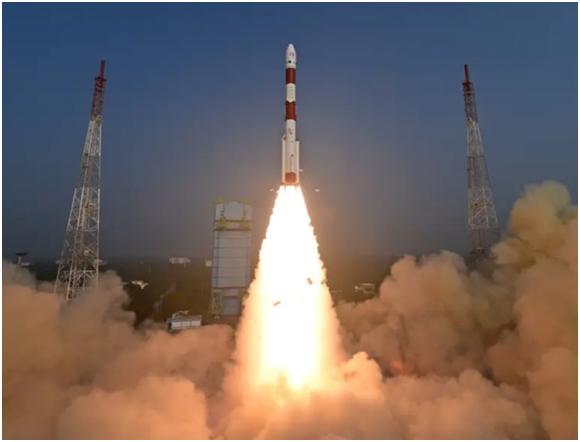
From Vikram-S to hyperspectral constellations — India’s private space sector is no longer waiting for permission.
Semiconductors: Infrastructure Bets With a Long Horizon
India’s semiconductor ambitions are among the most capital-intensive in its deep-tech portfolio. The government’s Semicon India Programme carries a ₹76,000 crore incentive framework, and the Union Budget 2026-27 announced India Semiconductor Mission 2.0, with a ₹1,000 crore outlay for FY 2026-27 focused on equipment, materials, full-stack design IP, and supply chain resilience. Electronics Minister Ashwini Vaishnaw stated publicly in January 2026 that India is on course to be among the top four semiconductor manufacturing nations by 2035.
On the manufacturing side, Tata Electronics’ fab in Dholera — a ₹91,000 crore investment targeting 28nm to 110nm process nodes — has first silicon scheduled for December 2026. Micron Technology inaugurated its semiconductor assembly, testing, and packaging facility in Sanand, Gujarat, in February 2026. For startups specifically, the Design Linked Incentive (DLI) Scheme has supported 24 semiconductor design startups as of January 2026, which have collectively attracted ₹430 crore in venture capital, while 104 startups and 315 academic institutions have accessed EDA tools and IP cores for chip design prototyping.
Quantum Computing: Early Stage, High Stakes
Quantum computing remains the longest-horizon bet in India’s deep-tech map, but the architecture is being laid with unusual deliberateness. India’s National Quantum Mission, launched in 2023 with approximately $730 million through 2031, provides the research foundation. The government co-led a $32 million funding round for quantum startup QpiAI in 2025 — a rare direct federal investment in an early-stage company, signalling strategic intent beyond policy announcements.
State-level activity has accelerated alongside the national mission. Karnataka announced an INR 1,000 crore Quantum Mission in July 2025, targeting a $20 billion quantum technology economy in the state by 2035, supported by a quantum hardware park, four innovation zones, and a dedicated fabrication facility. Andhra Pradesh followed with the Amaravati Quantum Valley initiative in November 2025. India’s roadmap targets 10 globally competitive quantum startups by 2035 and aims to anchor the country as a top-three quantum power.
The Structural Questions That Determine the Outcome
The enthusiasm is real and the data supports it. But India’s deep-tech ecosystem faces structural challenges that no volume of press releases resolves. The transition from seed to pre-Series A remains the ecosystem’s most fragile stage — a ‘valley of death’ where many startups lose momentum not from failure but from funding stagnation. Deep tech requires seven to ten-year capital horizons; Indian venture capital has historically operated on five to seven. Patient capital, and the LPs willing to provide it, remain in short supply relative to the ambition on display.
Talent is the second constraint. Semiconductor fabs, space systems, and quantum hardware require specialists that take years to produce and are globally contested. The government has initiated programmes to train 85,000 engineers in advanced semiconductor manufacturing — a necessary but long-dated intervention. And commercialisation pathways, particularly for defence, space, and quantum applications, still depend heavily on government procurement decisions that move slowly.
None of these constraints disqualify the ambition. India has demonstrated, repeatedly, that it can produce world-class engineers and researchers given the right incentive structures. The 2025 data suggests that the incentive structures — policy, capital, and market demand — are finally aligning. Whether the next decade produces a handful of globally scaled deep-tech giants, or a long list of promising startups that plateau, will depend on whether the ecosystem learns to sustain what it has learned to start.